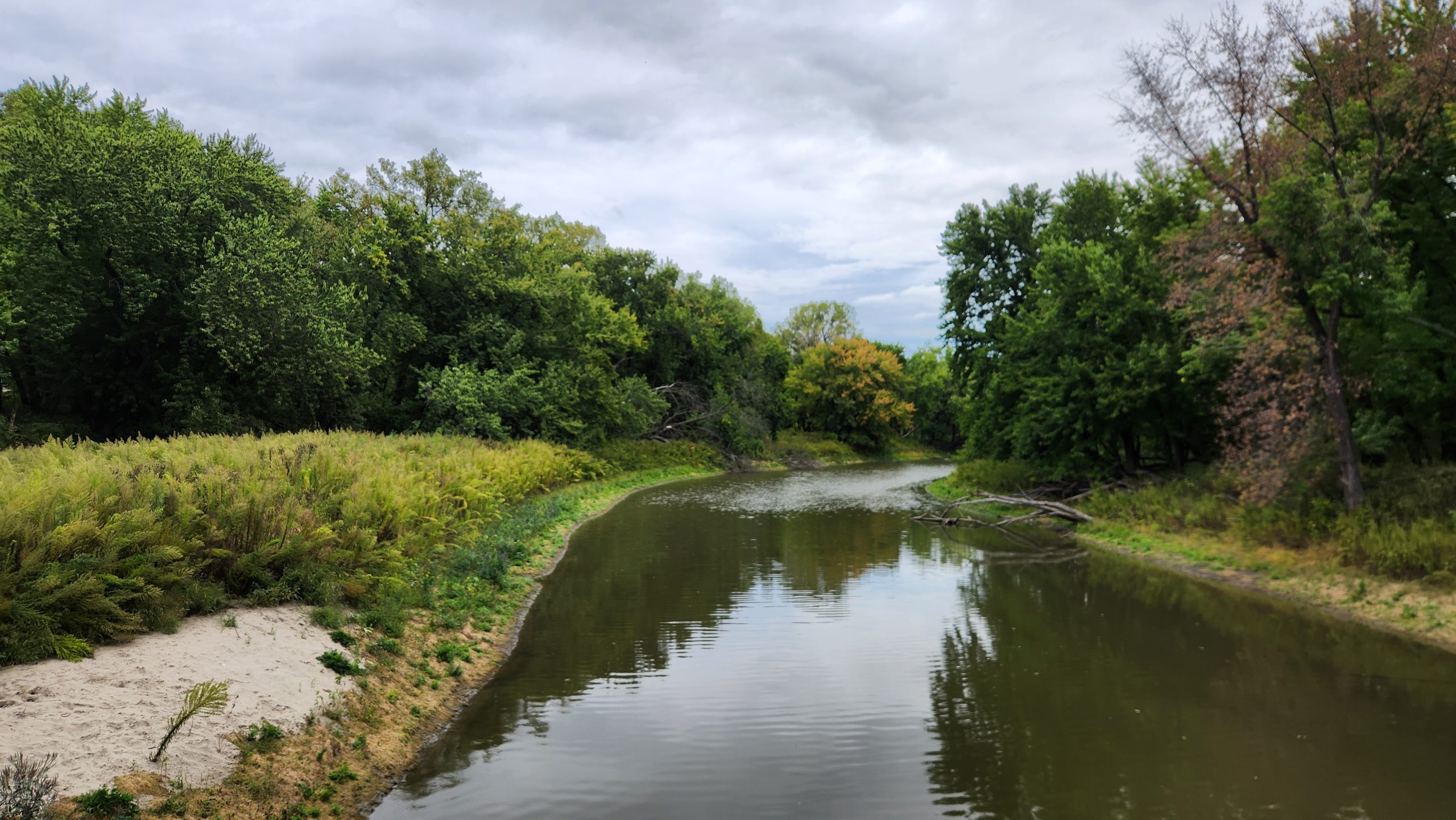

In 1992, when Gov. Arne Carlson set a goal of improving water quality in the Minnesota River, Tom Crawford hadn’t been born. David Minge, a former judge and lawmaker, had just been elected to his first term in the U.S. Congress, representing much of western Minnesota.
Three decades later, the two are colleagues on the Minnesota River Collaborative (MRC), a citizen group with a broad range of legal and technical expertise that is working to reduce pollution and improve the water quality in the river, long considered one of the most polluted rivers in the nation.
The coalition, which meets monthly with the Minnesota Department of Natural Resources (DNR), focuses primarily on ditch drainage projects, tracking and commenting on specific projects and adding its weight to court cases through amicus briefs.
“We’ve moved the needle within the DNR,” Crawford said.
Related: Task force wades into the complexity of water stewardship in the Land of 10,000 Lakes
The coalition is a group of about 50 “retired people, engineers, retired lawyers, retired agency people and a handful of organizations that have continuing interest” in the Minnesota River, said Minge, now 84. “We’ve had four or five active and retired lawyers. Engineers have taken a real leadership role, six to seven engineers, and we have three or four agency retirees.”
Crawford, 31, works with Friends of the Minnesota Valley and the Izaak Walton League, both of which played major roles in launching the MRC.
Instead of focusing on conventional “best management practices” for water quality — such as ditch buffers, grassed waterways or water storage — the group reviews drainage projects “on a high level,” looking for significant impacts that could warrant pressure to improve projects, Crawford said.
Altered hydrology releases sediment
Despite millions of dollars spent and almost countless hours of work put in over the past three decades, the geographical makeup and land uses in the Minnesota River Basin present major challenges.
Unlike pre-settlement natural drainage, altered hydrology creates a “fire hose” effect with high water volume and velocity scouring the riverbanks, adding tons of sediment to the river along with some cropland fertilizer.
“How we drain the land in combination with the weather conditions due to climate change, with the more extreme rain events we’re getting a lot more water into the river,” Crawford said.
From its confluence with the Mississippi River below Fort Snelling, the Minnesota River is the largest source of sediment to the Upper Mississippi River. It contributes algae-fueling nutrients like nitrogen and phosphorus, helping to create a low-dissolved oxygen “dead zone” in the Gulf of Mexico.
“The more water that flows into the river, the more erosive the river becomes, and those soft sandy banks of the Minnesota River get chewed up and sent down into the Gulf,” Crawford said.
In the Minnesota River Basin, ditches and below-surface drain tiles quickly remove water from rainfall and former wetlands in the basin for the benefit of agriculture.
“We’ve got probably 100,000 miles of private tile that is totally unmapped and unaccounted for and unregulated,” Crawford said. “There’s no requirement that these people are to notify anybody.”
As one example of its involvement, the coalition is participating on an amicus basis in a case in Renville County involving Limbo Creek.

A dispute over authority
Minge said the Minnesota Center for Environmental Advocacy (MCEA) is lobbying the Minnesota Pollution Control Agency (MPCA) to recognize drainage outlets as point sources.
“I expect that’s going to end up in court by the end of the year,” he said.
A lawsuit filed by the MCEA and other environmental groups argued that the MPCA had the authority to regulate cropland drainage systems and outlets.
In August, a Ramsey County District judge “accepted the MPCA’s argument that it does not have the authority to regulate agricultural drainage systems,” stated an MCEA news release. MCEA is appealing that ruling, said Sarah Horner, the organization’s director of media relations.
Minnesota law addressing drainage ditches offers a process for counties and landowners to redetermine benefits according to changes in land uses, drainage capacities or land values. The group’s engineering and economic reviews “are the two big levers that we can pull to make a difference,” Crawford said.
“We track preliminary engineering reports, DNR comments, and sometimes the redetermination of benefits,” Crawford said. He said that Steven Taff, a former professor of agricultural economics at the University of Minnesota, “runs the numbers and tells how absurd some redeterminations are.”
“There’s no central government or governance around drainage,” Crawford said. “We don’t even have a sense of its scope.”
Related: Minnesota River restoration, long a labor of love for advocates, could be getting a boost from the state
The collaborative’s investigation of a ditch project in Jackson County revealed potential environmental impact on a calcareous fen — a rare type of wetland — and a negative financial benefit, Crawford said.
The group helped Lyon County secure a grant to put in a large water storage area to reduce the impact of a drainage project.
Hopes for a commission
At its Sept. 9 meeting, the collaborative — which has not been organized as a nonprofit and has little financing — discussed the water quality task force convened by Minnesota Attorney General Keith Ellison and the prospects for legislation that would create a Minnesota River Commission.
Peg Furshong, a task force member representing Clean Up the River Environment, said the task force will be issuing a report this fall. Some members of the panel were “frustrated and disheartened” by a small group using stalling tactics that avoided most of the agricultural and mining issues, she said. A request to continue the task force was declined, she said.
As for the river commission, Scott Sparlin, representing the Coalition for a Clean Minnesota River, said the effort was delayed in the past legislative session.
“After the elections, we will begin securing potential bill authors on both the House and Senate sides,” he said in an email to MinnPost. “We have already spoken with potential authors and cosigners and will be seeking additional support as well.”
Organizations, state agencies and businesses represented among the nearly 50 people on the MRC roster include the Coalition for a Clean Minnesota River, Friends of the Minnesota Valley, the Minnesota Center for Environmental Advocacy and the Izaak Walton League, among several others.
The post ‘We’ve moved the needle’: How a citizen group is shaping cleanup efforts on the Minnesota River appeared first on MinnPost.
Originally reported by MinnPost by Forrest Peterson. Read the full story at the source.
Comments
No comments yet. Be the first to share your thoughts.
Leave a Comment