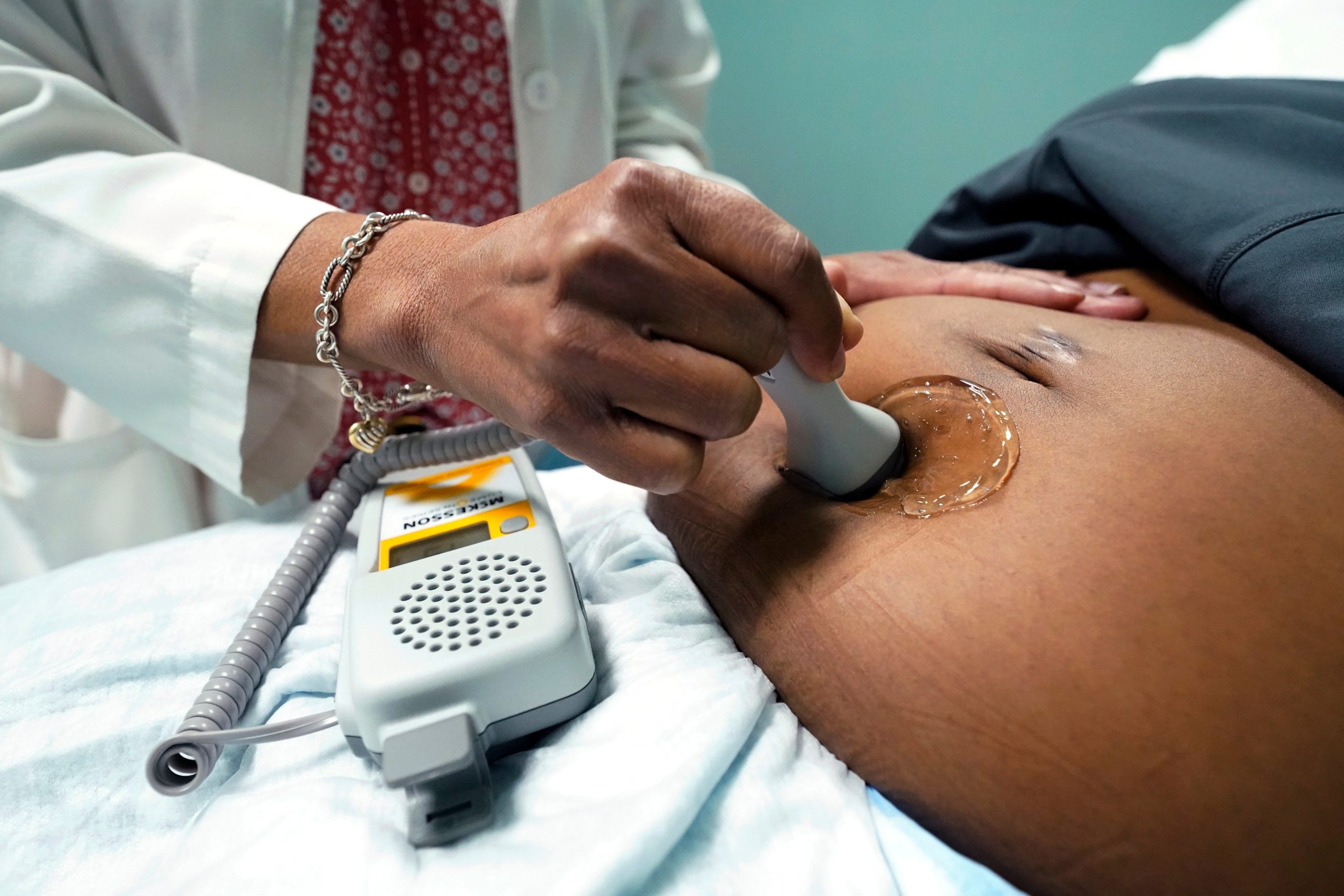

Minnesota’s teen pregnancy rates have been falling since 1990, but experts and advocates say federal cuts to pregnancy prevention programs could set back years of progress and leave racial and geographic disparities unaddressed.
A recent annual report showed continued but unequal progress in reducing teen pregnancies in Minnesota. The 2026 Minnesota Adolescent Sexual Health Report showed that in 2024, the most recent data available, there were 11 pregnancies for every 1,000 people between 15-19 years old, compared with 59 per 1,000 in 1990.
The same trend is happening in Hennepin County, where birth rates among teens aged 15-19 have dropped by 75% since 2006, according to figures provided to MinnPost by the county.

But while Minnesota has some of the lowest teen pregnancy rates in the nation, Jill Farris, director of training and education at the University of Minnesota Center for Healthy Youth Development and the team lead on the statewide report, said its geographic and racial disparities are some of the worst.
Disparities in teen pregnancy vary by region, race
For example, the 10 counties with the highest teen birth rates, such as Watonwan and Nobles, are all in Greater Minnesota. Farris attributes these higher rates to there being limited resources such as fewer clinics in rural areas, greater travel distances and less access to youth-friendly reproductive services and education.
Racial disparities are also rampant. While adolescent birth rates have fallen across every race and ethnicity measured in the sexual health reports since 2013, the rates for Native American, Asian, Pacific Islander, Black and youth of Hispanic or Latino origin are all higher than for white youth. And many of the years tracked have seen those figures higher than U.S. averages for those same demographic groups.

These disparities are part of why Hennepin County is fighting the U.S. Department of Health and Human Services (HHS) in court over revoked funding for teen pregnancy prevention programs.
Before the cuts were announced, Hennepin received just under $6 million from the federal Teenage Pregnancy Prevention (TPP) program, an initiative run by the HHS that provides annual grants to decrease adolescent sexual risk behavior, unintended pregnancies and sexually transmitted infections. The dollars go toward the county’s Better Together Hennepin program, which puts health educators in area schools and clinics.
In June, HHS said Better Together Hennepin did not meet new program criteria, which now bar discussions of teenage sexual activity, “gender ideology,” and diversity, equity, and inclusion (DEI) practices in curriculum. It canceled roughly $537,000 in unspent funds for this fiscal year. In a complaint filed in July against the HHS and Secretary Robert F. Kennedy, Jr., the plaintiffs, which include Hennepin County, alleged the new requirements were set just three days before the cuts were announced.
“We’re stuck in situations where needed services are being discontinued, where teen pregnancy [prevention] is not being funded anymore. That’s wild,” Commissioner Angela Conley said at a Hennepin County budget presentation in July.
Related: Hennepin notches a legal victory against federal ‘abstinence only’ effort
The bulk of the teen pregnancy rate decreases in Hennepin County and Minnesota can be chalked up to better contraceptive methods and a general societal shift with teens delaying sexual activity, Farris said.
“Those are the two things that are really driving this decline, and I think we’re not in any danger of either of those trends moving in a different direction,” Farris told MinnPost.
The racial disparities in teen pregnancy rates in the state are a result of a variety of intersecting issues, like poverty, limited access to education and healthcare and structural inequalities that many communities of color face.
Teen pregnancy rates in Native communities
For Native American youth, these higher teen pregnancy rates can also be associated with a lack of trust many feel toward the government and healthcare systems, said Aaron Johnson, director of programs at the Division of Indian Work (DIW), an organization that provides culturally-based education and leadership development for the urban Native American community.
DIW runs a program called Live It!, which provides teen pregnancy prevention and sexual health education for Native youth with culturally-specific topics that disproportionately affect Native Americans, such as human trafficking and Missing and Murdered Indigenous Relatives.
Better Together Hennepin does not directly fund Live It!, but Johnson said these cuts to programs similar to DIW’s are part of a series of recent federal anti-DEI actions, which could potentially be an early warning sign for the organization. Since Live It! is, by design, a culturally-based program formed around identity, more federal changes targeting organizations with DEI-related elements could negatively impact – or even completely eliminate – DIW’s programs.
“We’re a Native-serving organization. If they want to say that we can’t specifically serve Native people, our nonprofit goes away,” Johnson said.
Related: For women, Minnesota Adult and Teen Challenge brings a special focus on recovery needs
One of the clinics Better Together Hennepin funds is Annex Teen Clinic, a nonprofit that provides sexual health resources and education with a particular focus on youth in North Minneapolis and northwest Hennepin County.
Nyssa Krause, executive director at Annex, said the organization’s health mentors taught over 400 classes about topics like consent and healthy relationships to more than 2,600 students last year. However, funding from Better Together Hennepin is only guaranteed through the end of 2026 as a result of the federal cuts. After that, there is no word yet on whether Annex will be able to sustain any or all of its health mentor program.
“Our health mentors and sexual health clinic for young people really fills already a critical access gap in healthcare and education for sexual health, and so I think the implication can be the loss of these health mentors in our school,” Krause said. “Youth (won’t) have the knowledge to be able to make their own decisions.”
How lack of sex education impacts teen pregnancy rates
Kailee Schaberg, a health mentor at Annex, worked at Robbinsdale Middle School before it was consolidated into Sandburg Middle School earlier this year. She said the school did not have any designated health courses, but rather a nine-day unit in students’ physical education classes where she would come in and teach topics like mental health, puberty, hygiene and healthy relationships.
Students could also opt in for one-on-one conversations with their school’s health mentor and receive referrals to various resources. Schaberg said her and the rest of Annex’s health mentors made over 250 student referrals to different resources last school year, the majority of them being for reproductive services.
“That referral pattern really tells us and communicates to us that there’s a need for these services and a need for young people to be connected to these services,” Schaberg said.
Minnesota does not currently have statewide health standards. If health mentors at Annex and other schools and clinics are cut next year, Schaberg, Krause and Farris, of the University of Minnesota, are concerned youth will miss out on crucial education and support they might not be getting anywhere else.
“Health mentors are an embedded support staff within their site, and so losing a trusted adult within the school system is something that worries me,” Schaberg said.
The lawsuit Hennepin is part of is still ongoing. While a federal judge blocked the HHS from using the new criteria to award grants in August, it remains to be seen whether the canceled funds will be restored.
The post Minnesota has some of country’s lowest teen pregnancy rates – but worst racial disparities appeared first on MinnPost.
Originally reported by MinnPost by Maddie Robinson. Read the full story at the source.
Comments
No comments yet. Be the first to share your thoughts.
Leave a Comment